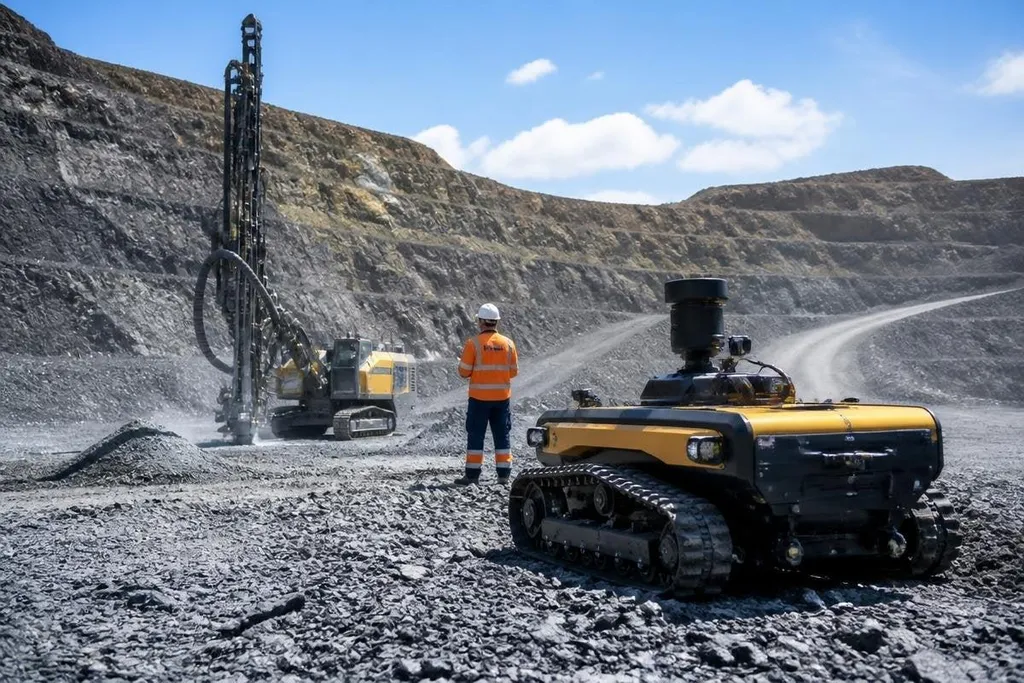
Mining robots could reduce some waste, fuel use, and worker exposure to danger. They can’t make extraction clean, and their value depends on the mine, the power source, and the task they take over.
- Remote machines can keep people away from unstable areas.
- Sorting systems may reduce the amount of rock that needs processing.
- Automation adds energy, sensors, software, and maintenance needs.
Where robots can cut waste
A mine moves much more rock than it sells as ore. Robotic drilling and sensing systems could help crews place holes with greater control, so fewer blasts damage material outside the target zone. That can reduce waste rock and limit the energy spent moving it.
Ore sorting is another possible route. A system can inspect pieces of rock and separate material before it reaches a crusher or processing plant. Less unwanted rock entering the plant means less crushing, water use, and tailings for the same amount of useful material.
The result depends on the quality of the sensors and the sorting rule. A system that rejects useful ore creates a different kind of waste, so mine operators need site data before claiming a gain.
Safety is part of the calculation
Mining robots can also move people away from areas with unstable ground, dust, heat, heavy vehicles, or explosives.
Remote operation lets a worker control equipment from a safer location, though the person still needs a clear view of the task and a reliable link to the machine.
Autonomous haulage can reduce the number of people inside a vehicle’s operating area. That changes the safety plan rather than removing the need for one. Roads, loading points, maintenance zones, and emergency stops still need careful design.
Failure in a remote pit can also create a recovery problem. Crews may need to enter the area to clear a machine, repair a sensor, or restore communications. Safety gains count only when the full work cycle is included.
Energy does not disappear
Each machine uses power. The source may be a battery, a cable, a diesel generator, or an electric grid. Its environmental result depends on the energy it replaces and the energy it consumes.
Replacing a diesel inspection vehicle with a small electric robot could cut fuel use for that task. Replacing a human inspection round with a large autonomous vehicle may produce a smaller gain if the vehicle adds long charging periods, extra support equipment, or frequent battery transport.
The same question applies to maintenance. Cameras, radar, LiDAR, computing hardware, batteries, and drive systems all need parts and service. A mine should count those inputs across the machine’s working life instead of treating automation as a free reduction in emissions.
Mining claims about lower emissions need the machine, ore, energy use, and site conditions named. Robot24.com can put those facts beside the robot’s task, leading to the next limit: a robot can move rock without knowing which material the mine needs.
The hard limit: robots don’t choose the ore
Mining remains an extraction process. Mining automation may improve drilling, sorting, hauling, inspection, or site mapping, but it doesn’t decide whether a deposit should be opened or how much material the market demands.
That limit matters for sustainability claims. A more accurate machine can reduce waste at one stage while total energy use rises somewhere else. A remote system can reduce worker exposure while adding batteries, network equipment, and repair trips.
I'd judge a mining robot by the material and energy it avoids moving, not by the number of tasks it can perform. The useful question is narrow: what work does the machine replace, and what new work does it create?
A practical check for mine operators
Before buying or testing a robotic system, check these points:
- Map the task: record the people, vehicles, fuel, water, and rock involved today.
- Set the boundary: include charging, communications, maintenance, recovery, and disposal.
- Test the failure: plan for lost links, bad sensor data, blocked roads, and manual takeover.
- Measure the output: compare useful ore, waste rock, processing demand, and downtime.
- Check the power: identify the source of electricity or fuel used by the robot.
- Review the whole cycle: repeat the measurement after routine operation, not only during a clean demonstration.
Robots can make a mine more careful with material and safer for workers, but they can’t make the mine low-impact by themselves. The next useful proof is a site-level record showing less waste or energy for the same useful output.